
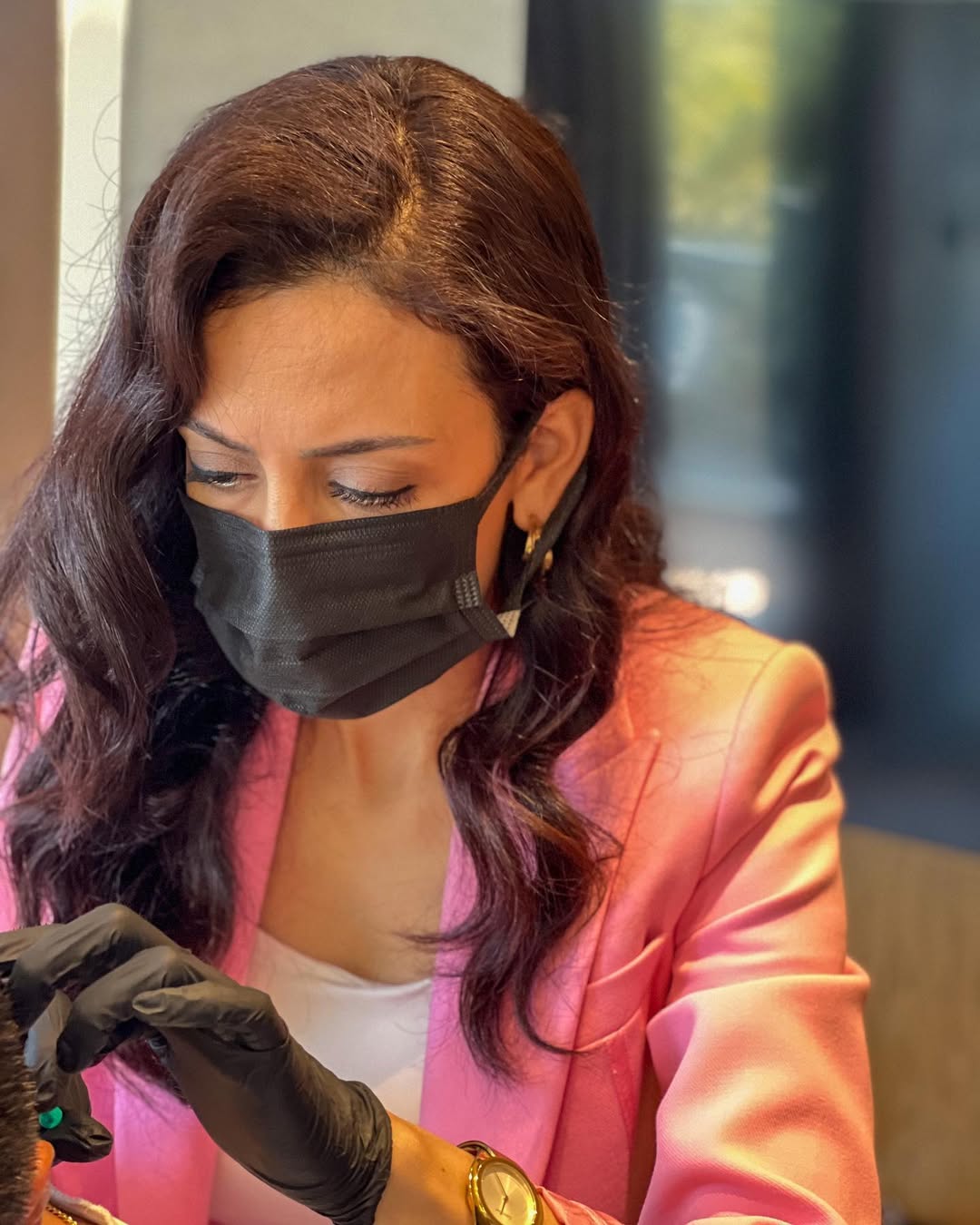
Botox is currently one of the most preferred applications in the field of facial medical aesthetics. It has been safely used for many years, especially in softening fine lines and wrinkles that become pronounced over time due to facial expressions.
As Op. Dr. Ayşe Karakaya, my priority in Botox applications is not to create an artificial appearance that freezes facial expressions, but to achieve a more rested, softer, and livelier expression while preserving the person's natural mimics. A well-planned Botox application can provide a fresher and more balanced appearance without changing the character of the face.
What is Botox?
Botox is a medical aesthetic procedure applied to reduce the appearance of wrinkles caused by the excessive activity of facial muscles. Its most common use is to soften the lines that become pronounced over time on the face and to achieve a more dynamic facial expression.
It is particularly effective in areas with intense facial movements, such as the forehead, between the eyebrows, and around the eyes. With appropriate patient selection and correct dosage planning, a more balanced expression can be achieved while preserving a natural appearance.
Where is Botox Applied?
The areas that respond best to Botox treatment include forehead lines, wrinkles between the eyebrows, and lines around the eyes. The mimic lines that form in these areas over time can cause the face to appear harsher, more tired, or older than it actually is.
In addition, Botox can also be used to support the softening of laugh lines in the cheek area, brow lifting applications, and lines in the chin and neck. Each application should be specially planned according to the individual's facial anatomy and needs.
What Does Botox Do?
The Botox application helps to temporarily relax the facial muscles in a controlled manner. As a result, the appearance of wrinkles on the skin decreases, lines become softer, and the face gains a more rested expression.
The aim here is not to make the face completely immobile. My approach is to achieve results that preserve natural mimics, do not distort the person's expression, and make them look simply better, more vibrant, and more well-groomed from the outside.
When Does the Effect of Botox Start?
The effect of Botox is limited to the area where it is applied. After the application, the effect usually becomes noticeable within 3 to 7 days. With the settling of the result, a softening of the lines and a calmer appearance on the face can be observed.
This effect is not permanent; as the effect of the application diminishes over time, muscle movements return to their original state, and the person approaches their appearance before the application.
How Long Does the Effect of Botox Last?
The effect of Botox lasts for an average of about 6 months in most people. The duration may vary depending on the individual's muscle structure, mimic usage, lifestyle, and application plan.
As the effect diminishes, there is a gradual return to the pre-application state. With regular and appropriately timed applications, a more balanced and well-groomed appearance of the face can be maintained.
Is Botox Safe?
Botox is a procedure that has been used in medical aesthetic applications for many years and is safely preferred when applied under appropriate conditions. Correct product selection, accurate anatomical assessment, and application by a specialist physician are of great importance in this regard.
The most important aspect of a successful Botox application is not just to reduce lines, but to achieve a natural result while preserving the person's facial expression. Therefore, the application must be planned specifically for the individual.
What Appearance is Targeted After Botox?
The desired appearance after Botox is not an artificial, stiff, and expressionless face, but rather a softer, more rested, and fresher expression. The true elegance in facial aesthetics lies not in the noticeable effects of the procedure, but in the person looking better.
As Op. Dr. Ayşe Karakaya, I always prioritize achieving natural and balanced results in medical aesthetic applications. Because the best aesthetic result is the one that suits the person's own face the most and does not give an exaggerated feeling when viewed from the outside.
Frequently Asked Questions About Botox
Which areas is Botox most commonly applied to?
Botox is most commonly applied to forehead lines, wrinkles between the eyebrows, and lines around the eyes. In some cases, it can also be used for brow lifting, chin, and neck areas.
When does the effect of Botox appear?
The effect of the application generally becomes noticeable within 3 to 7 days.
How long does the effect of Botox last?
The effect of Botox lasts for an average of about 6 months in most people. This duration may vary based on individual differences.
Is Botox permanent?
No. Botox is not a permanent application. When its effect diminishes, muscle movements gradually return to their previous state, approaching the appearance before the application.